Honouring the Legacy of
Professor Dr. Paras Diwan
(1924 - 1997)
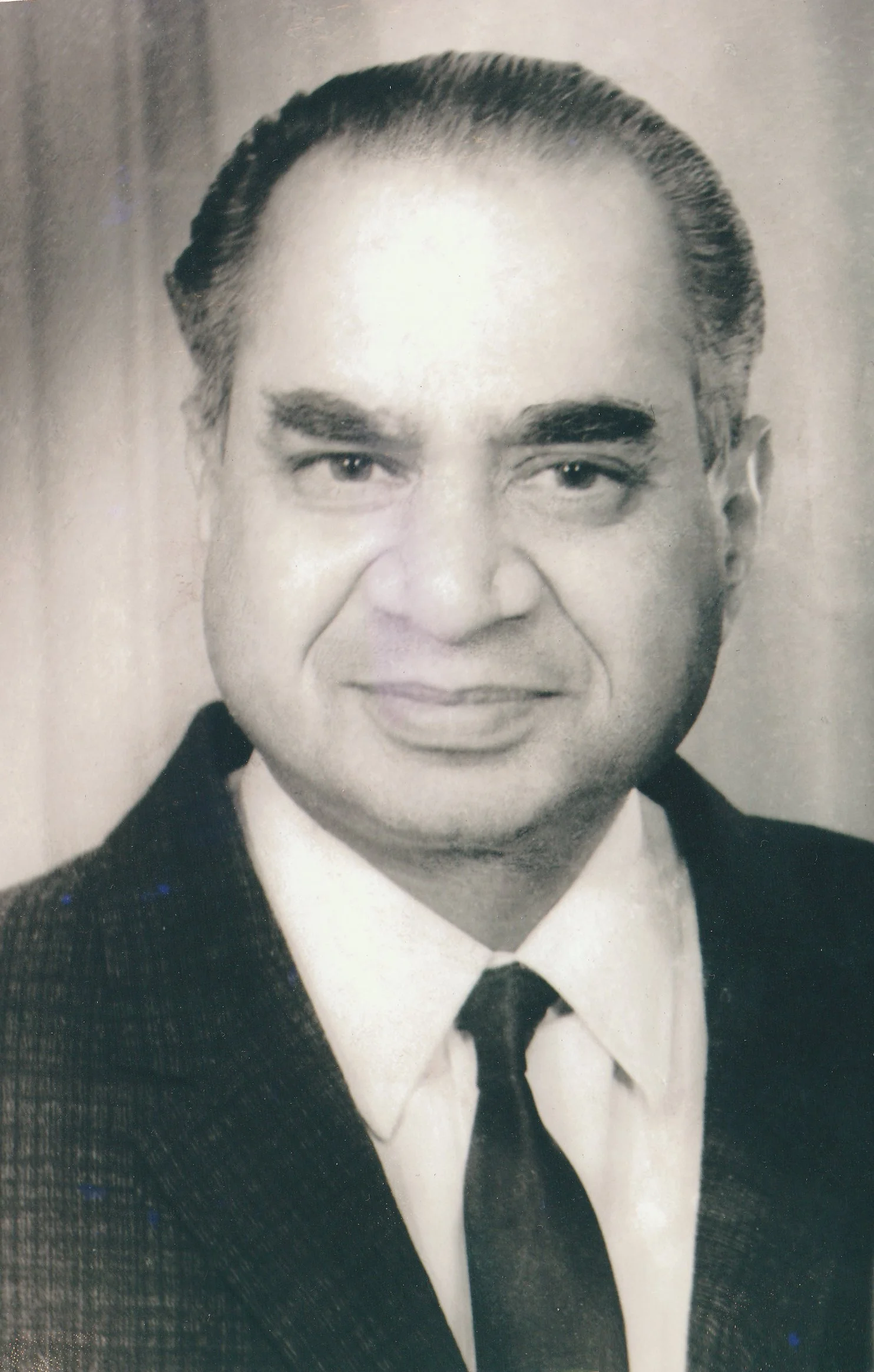
"Law cannot be understood shorn of social facts which give it birth. If society is to live in peace and individuals in happiness, our legal institutions must show a progressive development... It is continuous social engineering.
— Dr. Paras Diwan
Life, Vision and Academic Legacy
Born on April 17, 1924, in Bhind, Madhya Pradesh, Dr. Paras Diwan was a product of India’s freedom movement, carrying a lifelong commitment to human dignity and equality above all divisions of region, caste, or creed.
After graduating from Victoria College in Gwalior, Dr. Diwan earned his LL.B. and LL.M. from Delhi University, followed by a doctorate in law focused on the comparative guardianship and custody laws of minor children under Roman, Hindu, Muslim, and English legal systems. His academic career spanned 34 years across Delhi University, the University of Rajasthan, and Panjab University, where he served as Professor and Chairman of the Faculty of Law until his retirement in 1984. Remembered fondly by generations of students as a master of jurisprudence with brilliant wit and warmth, he fostered a culture of open dialogue, academic conferences, and student welfare.
Trailblazer in Legal Aid and Social Reform
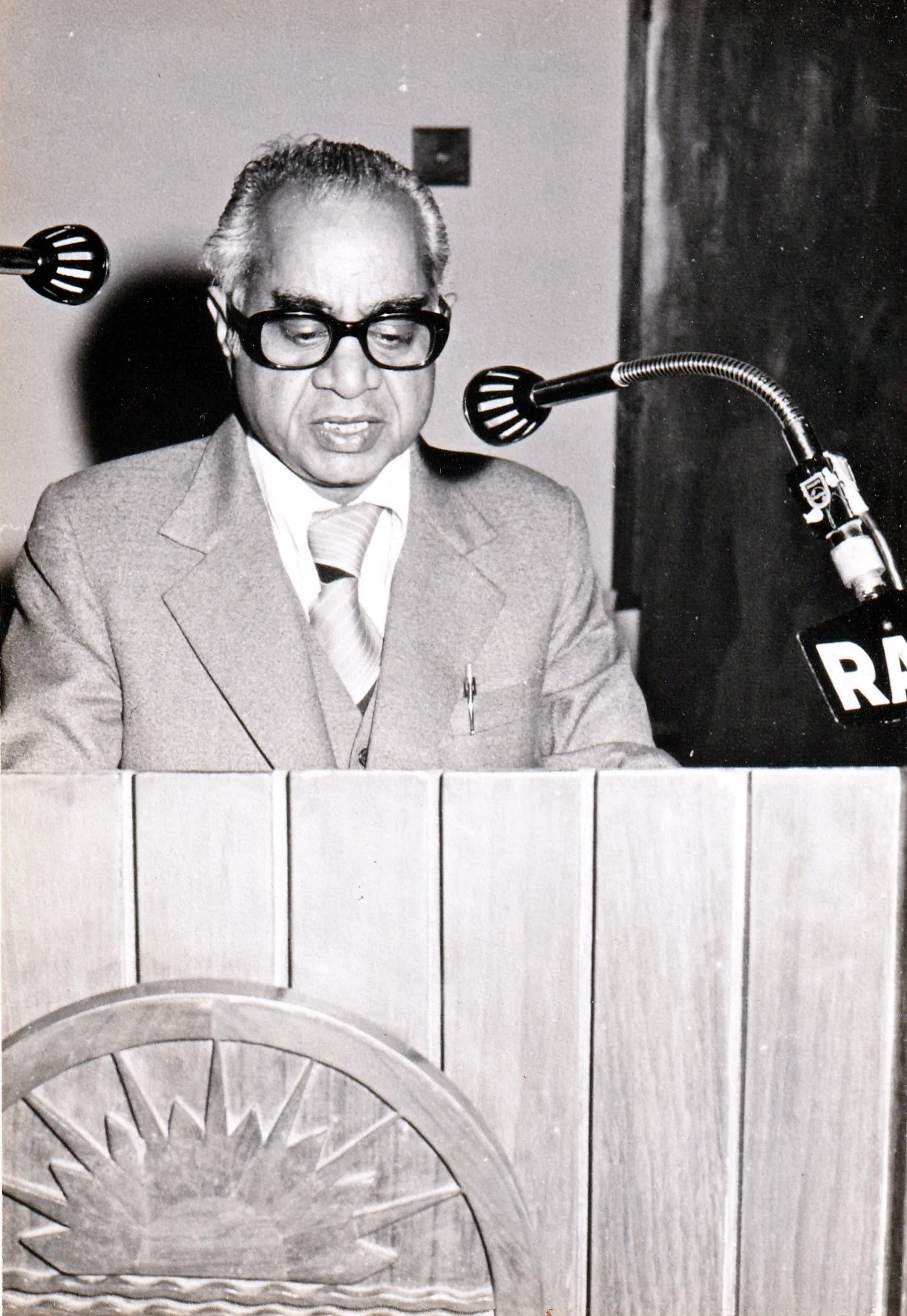
Following his university tenure, Dr. Diwan spent 13 years at the helm of the legal aid movement in Haryana as Executive Director of the Haryana State Legal Aid Committee and Member Secretary of the Haryana State Legal Services Authority. Almost single-handedly transforming the state's legal aid infrastructure, he spearheaded nearly 800 Lok Adalats (people's courts) to resolve backlogs for motor accident claims and conducted 45 para-legal literacy camps across rural districts to extend free legal aid to the underprivileged.
A staunch feminist and proponent of sociological jurisprudence, Dr. Diwan argued that family disputes, particularly those involving children, should move away from adversarial litigation toward therapeutic, welfare-centric resolution.
Judicial Authority and Citation
Dr. Diwan’s treatises remain authoritative references in Indian jurisprudence. His writings have been cited extensively by the Supreme Court of India, most notably by Chief Justice Y.V. Chandrachud in the milestone Shah Bano case, as well as by High Courts across the nation and Canadian courts in landmark international adoption proceedings.
Dr. Paras Diwan Memorial International Energy Law Moot Court Competition
To commemorate Dr. Paras Diwan’s lifelong commitment to legal education and his passion for encouraging young advocates, the family instituted the Dr. Paras Diwan Memorial International Energy Law Moot Court Competition.
Over 15 historic and highly successful editions, this annual tournament grew into one of Asia’s premier international moot court competitions. It drew participating teams from leading law schools across India and around the globe to deliberate on complex, emerging challenges in energy law, international trade, and environmental policy.
The competition provided thousands of law students with a rigorous academic platform to hone their research, brief-writing, and oral advocacy skills. The 15 editions stand as a proud testament to Dr. Diwan's enduring legacy in shaping modern legal discourse and inspiring future generations of jurists worldwide.
Published Works & Treatises
Family & Personal Laws
Modern Hindu Law (Codified & Uncodified)
Family Law
Muslim Law in Modern India
The 5-Volume Master Treatise on Indian Personal Laws:
Vol. I: Law of Marriage and Divorce
Vol. II: Law of Adoption, Minority, Guardianship and Custody
Vol. III: Law of Intestate and Testamentary Succession
Vol. IV: Law of Endowments, Wakfs and Charitable Trusts
Vol. V: Law of Hindu Joint Family, Debts, Gifts, Maintenance, Damdupat, Benami Transactions and Pre-emption
Hindu Law (Comprehensive Treatise)
Law Relating to Dowry, Dowry Deaths, Bride Burning, Rape and Related Offences
Law of Maintenance in India: Discarded Wives, Minor Children, and Elderly Parents
Law of Parental Control, Guardianship, and Custody of Minor Children
Constitutional, Administrative & Public Law
Indian Constitution: A Document of People's Faith and Aspirations
Amending Powers and Constitutional Amendments: From First to Forty-Fourth Amendment
Abrogation of Forty-Second Amendment: Does Our Constitution Need Amending?
Administrative Law: Towards New Despotism
Union-States Fiscal Relations: An Overview
International, Environmental & Customary Laws
Private International Law: Indian and English
Customary Law (Punjab, Haryana, Himachal Pradesh, and Delhi)
Human Rights and the Law: Universal and India
Environment Administration, Law and Judicial Attitude(3 Volumes)
Environment Protection Acts and Rules (Central & States)
Indian Contract Act
Key Articles & Scholarly Papers
During his career, Dr. Diwan published over 250 research papers in premier national and international legal journals, including the Cambridge Law Journal, International and Comparative Law Quarterly, Journal of the Indian Law Institute (JILI), and Supreme Court Cases (SCC). A selection of his influential papers includes:
Weekend Marriages and Restitution of Conjugal Rights (1978, JILI)
Daughter's Right to Inheritance and Fragmentation of Holdings (1978, SCC)
Marriage and Divorce Law Reforms (1977, SCC)
Ceremonial Validity of Hindu Marriages: Need for Reform (1977, SCC)
Technological Niyoga and Nirodh and Social Engineering Through Law: Legal Aspect of AIH and AID (1980, JILI)
Believing and Non-Believing Hindus (1991, JILI)
Adultery: Criminal and Matrimonial Offence (1957, Madras Law Journal)
Adoption by a Hindu Widow: Adopted Son's Relationship with the Deceased Husband (1969, The Law Review)
Adoption of an Orphan under Hindu Law (1963, The Law Review)
Law of Adoption and Welfare of Child (Panjab University Proceedings)
The Child Wife's Guardianship and Custody (1977, The Lawyer)
The Illegitimate Child in the Modern Law (1969, Allahabad Law Review)
The Welfare Principle and Public Responsibility Towards Children in Modern Law (1969, The Lawyer)